
Carroll Court Docket Searches
Carroll runs no municipal docket portal of its own. The county's official description sends traffic and municipal ordinance matters to Wayne County Court. For a statewide lookup, the public tool is JUSTICE. Pull up a Carroll case with its exact citation or case number first. No number? Then enter the party's name, pick Individual or Entity, choose Wayne County, and select County Court when the Carroll paperwork points to the usual traffic or ordinance route.
- Read the Carroll paper for the case number, court, year, case type, and response date.
- Search JUSTICE with the number or the actual party name and correct name category.
- Select Wayne County and apply court type and known case type carefully.
- Review the Carroll result by case number, then separate the summary, register, image, and financial information.
- Contact County Court if a Carroll result is missing, old, restricted, or needs a copy.
Carroll Records Need Case Types
You cannot type Carroll into a party search. The village name may show up inside a citation narrative or an address. It never appears in the party index itself. A proper lookup needs the case number, the real party name, Wayne County, the court type, the year, and a supported case type. Common codes: TR for traffic, CI for civil, and SC for small claims. Pick the wrong type. The right register stays hidden.
| Carroll filter | Use |
|---|---|
| Case number | Best way to tie a Carroll paper to one case. |
| Party name/type | Starts a court index search, not a place search. |
| Wayne County | Targets the local court system for Carroll cases. |
| Court type | Separates County Court and District Court records. |
| TR, CI, SC | Narrows to the record path stated by the document. |
One-time remote searches can still bill you when nothing comes back. If a Carroll search returns blank, recheck the number, the spelling, the court, the type, and the year. Then ask the clerk to check the appropriate public record.
Inside the Carroll Municipal Court
Carroll has no municipal court and no village case portal. Local cases route through County Court. So a Carroll traffic ticket or ordinance case sits on the Wayne County Court register of actions. That office, not a presumed village court, can explain the public case record and what copy options exist. The village and the docket are two different layers. Carroll supplies the local context. Wayne County Court keeps the record. A village code source may describe an ordinance, but it records no plea, payment, order, or final outcome.
Carroll County Court Not Village Docket
Carroll counted 191 residents in the 2020 incorporated-place table, and county history lists it among the county's villages. That confirms the village's identity. It does not create a docket system. The practical access chain runs through JUSTICE, the public terminal, the state calendar, and County Court. A filed Carroll citation gets verified at the county court. A Carroll code question belongs with a local municipal source for the rule text. Official proof comes only from a clerk-certified record. Pick the wrong layer. You may get an accurate answer to a question you never asked.
Finding Carroll Court Dates
Use the Multi-Court Case Calendar for a Carroll-connected current or future court setting. Select County Court or District Court, select Wayne, then search by date or by at least two characters of a last name. Record the case number, caption, date, time, and location. The state warns that calendar information may be delayed. A Carroll setting should be cross-checked in the register after the date.
| Case number | Connects a Carroll calendar listing to the register. |
|---|---|
| Caption | Shows the public case style. |
| Date and time | Shows a scheduled event, not proof it happened. |
| Location | Shows the listed location and may need confirmation. |
| Setting type | May be shown as an arraignment, status, motion, or trial event. |
Carroll Calendar Results Need Follow-up
The calendar shows schedules; the register of actions is the court's chronological record. A Carroll calendar entry can still be continued, vacated, or amended before the hearing. "Continued" means the date moved. "Vacated" means it was canceled. Neither label tells you what happened next. So check the later register entry or call the clerk.
- Register of actions
- The chronological Carroll case-event record, often called a docket.
- Calendar
- A current or future Carroll setting display, not the case file.
- Case summary
- High-level public case information, not a certified court record.
Hit Reset between calendar searches. If the result you expected never appears, confirm the court type and case number, then search JUSTICE and call the clerk. Treat a blank result as a prompt, not a verdict.
Carroll Traffic Ticket Lookups
Read a Carroll traffic ticket for three things. Look for the court, the citation number, and the response date. A state citation or ePayment path only exists for eligible cases. Neither counts as a Carroll public docket search. County Court keeps the published record route for Carroll traffic and ordinance matters. JUSTICE shows the public status. The clerk handles specific questions about an appearance, a waiver, payment, or a warrant. Paying does not prove a warrant was recalled. The citation's instructions control any required appearance.
Carroll Copy Products and Clerk Routing
Name the exact product when requesting Carroll records. A register printout, a document image, an ordinary copy, a certified copy, a transcript, and a county digital-audio request are six different things. Wayne County Court can explain what exists and the current charge. Call 402-375-1622 before asking for an older file. Microfilm retrieval may need advance notice. A Carroll matter may also belong in district court rather than county court. The official directory identifies the district-clerk route. Use it for separate district registers, copies, judgment indexes, and trial-docket questions.
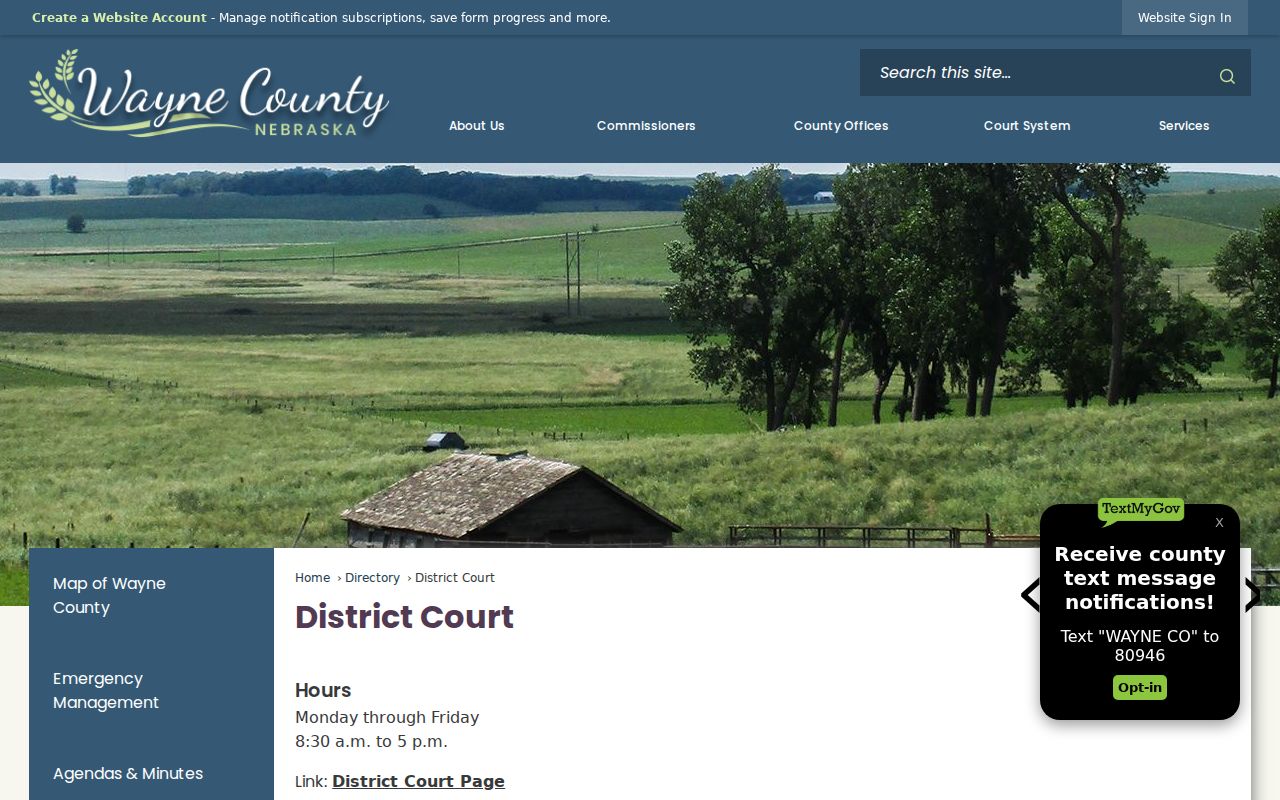
Send a Carroll request to the wrong court and access slows down. That risk grows when an earlier County Court event later produced a separate District Court record.
How Carroll Cases Reach the County
Carroll traffic tickets land in Wayne County Court. Municipal ordinance matters land there too, under the county's published jurisdiction description. Small claims and county civil cases from Carroll follow county-court paths. That holds when the case type fits. A Carroll felony can start in County Court, then move forward as a separate District Court case after bind-over. So one register rarely holds the whole story. The Carroll tie alone does not put every event in a single docket.
Docket flow: Carroll village ordinance or citation › Wayne County Court register of actions › Wayne County District Court when a district case is filed.
Search both Carroll court routes on their own when a document points to an appeal, transfer, preliminary felony event, or district case number. Keep the lower-court number handy. It links the earlier Carroll docket history together.
Carroll District Record Possibility
A County Court result does not end the hunt for Carroll readers. County Court and District Court keep separate registers and case numbers. A district-court event can follow a Carroll preliminary felony matter. It can also arrive as a separately filed district case. The case paper and register tell you which court holds the file; a Carroll address or event location alone never settles that question. One caution on figures. The county's civil-jurisdiction and small-claims information is a helpful filing-path reference. But it is not a Carroll village schedule. The $7,500 small-claims limit and the $70,000 county civil jurisdiction running through June 30, 2030 are County Court figures. They are not Carroll-specific claims.
Who Can See Carroll Court Records
Nebraska rules govern who may see Carroll court records. Through JUSTICE, authorized remote access, or courthouse terminals, an eligible party can reach indexes, case summaries, registers of actions, available images, and calendars. Not everything is open, though. Carroll juvenile, adoption, sealed, protected, and confidential records may be restricted, and a public index is not permission to obtain every underlying document.
Key Rules:
Nebraska Supreme Court Article 8 governs public electronic court access.
Nebraska Public Records Act §84-712 supplies the general inspection and copying framework.
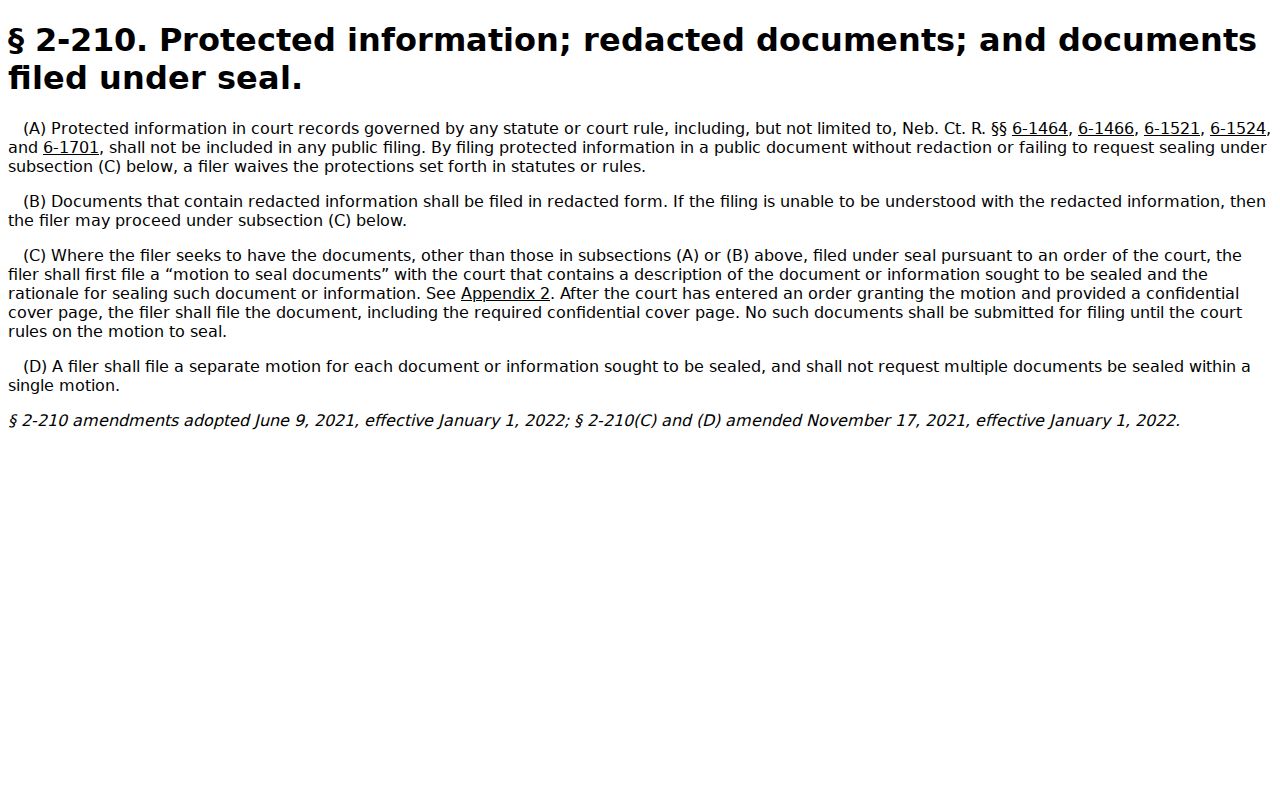
Nebraska Court Rule §2-210 addresses protected, redacted, and sealed documents.
The Article 8 source stands apart from the court rule source for a reason. A Carroll request has to weigh public access and protected records together. Each source speaks to one side of that balance.
Never chase alternate spellings or systems to work around a Carroll privacy restriction. Ask the clerk which part of the record is public instead.
Carroll Record Limits and Sealed Files
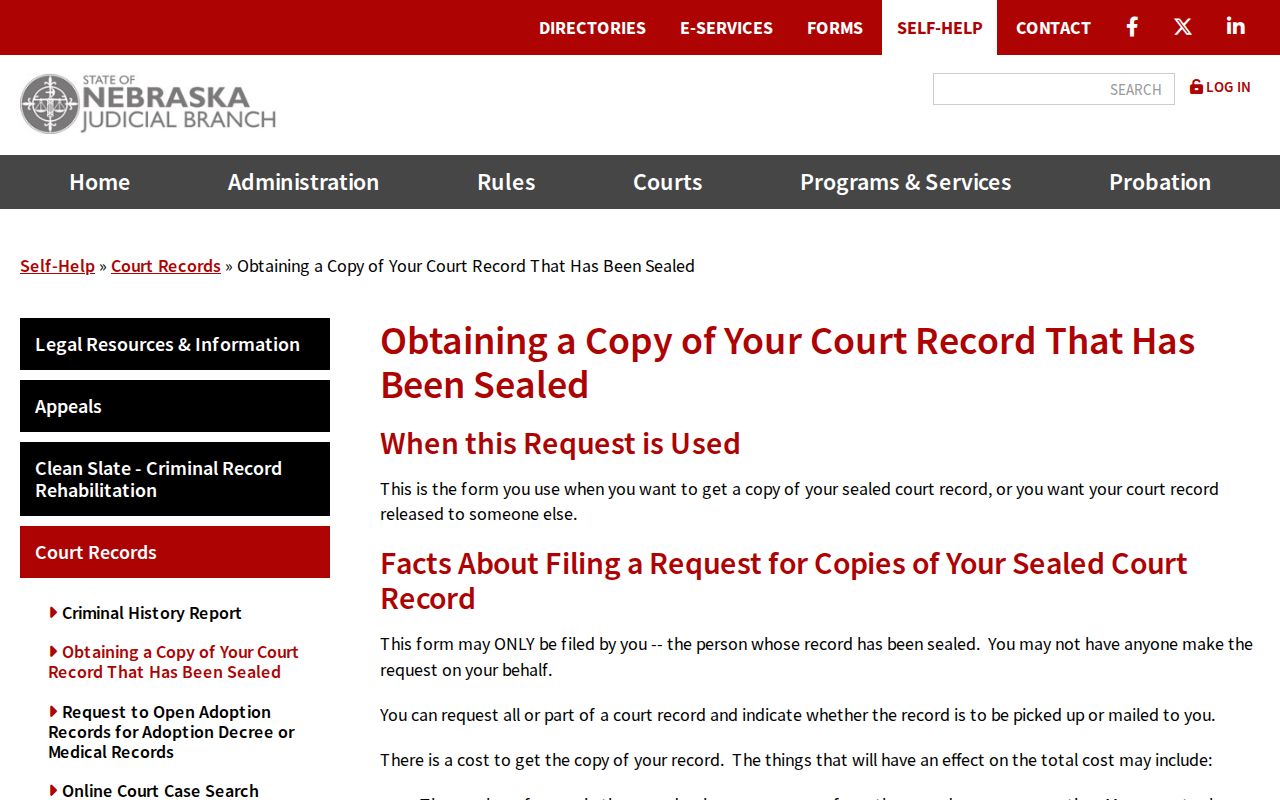
A blank Carroll result can mean several things. Maybe the name was misspelled, or the wrong court or case type was searched. Date lag, retention limits, microfilm, and privacy rules can also hide a record. The Judicial Branch does offer a process for a person requesting a copy of that person's own sealed record. But it is not a public-search shortcut for a Carroll docket lookup. And it demands court-specific information.
The official state courts page makes the distinction plain. A protected request for a sealed Carroll record is one thing. An ordinary public docket lookup is another.
For a Carroll public copy, state the case number, court, record component, and certification need. For a sealed record, follow the court's separate process and limits. When the first search comes up short, Carroll has a useful fallback chain. Check JUSTICE for the public register. Use the public courthouse terminal for the same public system. Use the calendar for a current or future Carroll setting, and call County Court for a missing public document or copy request. Give the clerk the exact Carroll court and case number where possible. If a Carroll case sits in District Court, the District Clerk keeps that separate register and file. County Court does not. Match the product to the need. A search display can identify the case. A register printout shows public events in order. An image, when available, is an underlying filing; an uncertified copy is a reproduction. A certified copy carries clerk authentication. A transcript or audio request follows a hearing-specific process. Printing a Carroll browser screen never turns it into a certified copy.
Carroll Record Request Details
A Carroll request works best when it names the record component rather than a broad label. Give the court and the case number. Add a public caption if needed, a document title or register date, and your choice among inspection, plain copy, and certified copy. The clerk can then say whether the Carroll item is public, indexed, retained, or limited. That answer beats treating an incomplete remote result as the final word on the record search. Hearing records deserve the same care. The event listed in the register is not the same thing as a transcript request. It is not a digital-audio request either. The register is the chronological court record. County audio is not the official record. A transcript is a written rendition prepared through a separate process. Each Carroll product may carry a different fee calculation or delivery method. Confirm current practice with the clerk. Carroll's county-based route also means a locality label alone will not carry a request. A village address may never appear as a party name in the public index. The same goes for a citation narrative. Preserve the case number, court, and case type from the Carroll paper. If a result is absent, check the court choice, spelling, year, and type before calling. That sequence respects legitimate access limits. It also gives the clerk what is needed to locate the correct public register or document.