
Wayne County Civil Docket Searches
Two state tools open the door to a Wayne civil docket. The Nebraska Judicial Branch Case Information service and the public JUSTICE search both find a register by party name. Both also work by case number. Pick Wayne County first. Then pick the court named on your document. Choose CI for a civil case or SC for small claims when you know the type. The claim may have passed county jurisdiction or gone up on appeal. In that case, check District Court as its own record path.
Remote searching carries a cost. A one-time search runs $17 for up to 30 records. Even a no-result search gets billed. That is a search fee only. It is not a clerk copy, certification, filing, or judgment amount. A courthouse terminal is the free alternative. Wayne County Court expressly lists a public-access computer. The clerks can also point you to the right local file or copy process.
- Enter the complete case number if available. Otherwise use the party’s court-record spelling and choose Individual or Entity.
- Select Wayne County, the court type, and CI or SC only when the type is reliable.
- Confirm the caption, court, year, and case number before reading the register.
- Read from the complaint or petition through service, response, motion, judgment, and later satisfaction or appeal entries.
- Ask the clerk for a permitted document or certified copy when a public image is unavailable or insufficient.
Wayne Civil CI and SC Filters
Case-type codes are your first filter in a Wayne docket search. CI marks the civil path; SC marks small claims. In JUSTICE, begin with Party Name, Wayne County, the court type, and a likely year. Case Subtype, judge, attorney, and sort options can narrow a broad result. A wrong subtype can hide the record you want. The official JUSTICE field preview walks through each control on the public search screen.
A full Nebraska case number strings together court, county, type, year, and an identifier. The public payment lookup breaks a number into those parts, but it is a payment tool. It is not the general civil docket-search interface. Copy the number exactly as it appears on a court document. A public result may include a case summary and party roles. It may also show financial entries, the register of actions, and any available document images.
One caution about access. The Nebraska eFiling and eNotice service exists for authorized parties and attorneys who need to file or receive notices. It does not replace the public lookup or a request to the clerk.
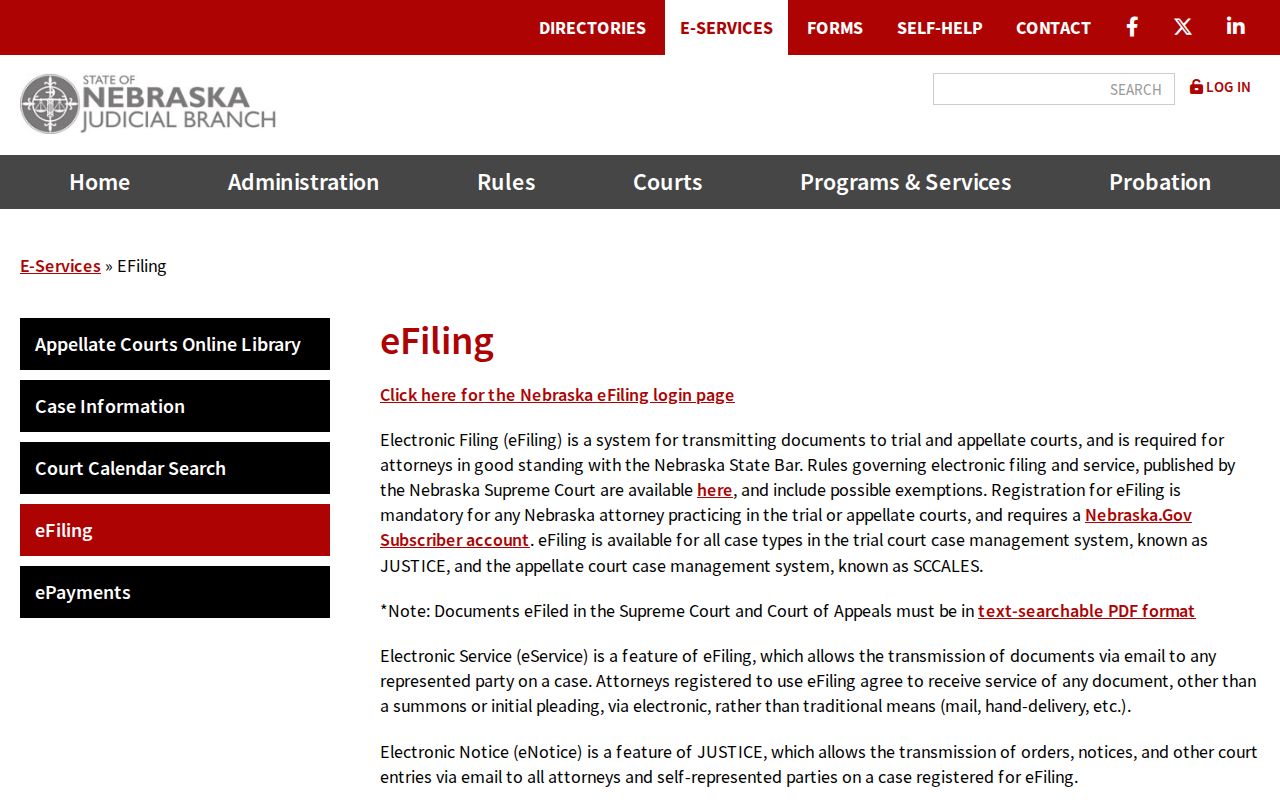
Filing happens through one channel, and reading happens through another. E-filing is part of the court process for authorized users, while the public register is where anyone can see case-event entries after the court records them.
Civil Dockets: What They Show
Behind the docket shorthand sits a chronological index called the register of actions. It can show the case number, caption, filing date, party roles, service activity, motions, court orders, financial entries, and any public images. The file itself may hold more. And remember: a public image is not a certified copy. Certification must come through the court's record process.
| Opening event | Complaint or petition, filing date, and case type show that a matter was opened or a pleading was filed. |
|---|---|
| Service and response | Summons, return, answer, appearance, counterclaim, or amended pleading track procedural progress. |
| Case management | Motions, rulings, scheduling, mediation, or continuance entries show how the case moved. |
| Disposition | Default, dismissal, settlement, judgment, or other public order language records the outcome. |
| Post-judgment | Payment, satisfaction, appeal, transfer, remand, or closure can appear after the initial ruling. |
A complaint only states allegations. It is never a finding. Before calling an outcome, find the later judgment or order in the docket.
Wayne County Civil Docket Boundary
Wayne County Court handles civil matters up to $70,000 through June 30, 2030. Small claims cap at $7,500. Anything outside county jurisdiction needs a second court. Transfers and district-court appeals do too, and each needs a second case-number check. These limits say where a case belongs. They say nothing about the amount awarded in any particular case.
Quick check. Use the court listed on the case document. A county civil case and a later District Court appeal or transfer can have separate registers. The county limit is a jurisdiction rule, not a judgment estimate.
What does it cost to start a case? The state's filing-fee schedule lists county civil filing totals between $62 and $82, plus a $58 small-claims filing total. Those are filing figures only, not a retrieval price, a debt amount, or a judgment amount.
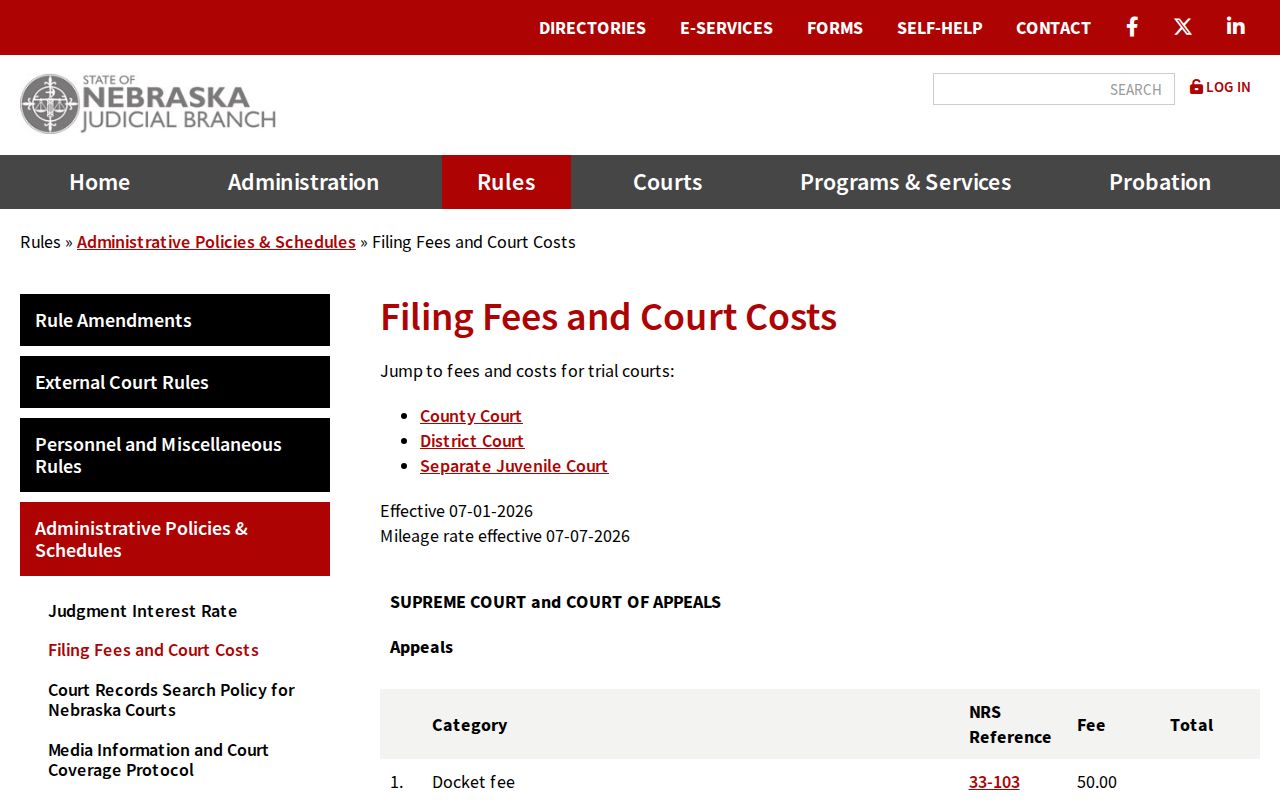
The schedule separates two different money questions. It covers the cost of opening a case, not the separate record-access and copy costs a docket search can raise.
What Cases Fill the Civil Docket
What fills a Wayne civil docket? Contract, tort, property, collection, and other civil matters within the court's jurisdiction all appear. The exact case type and court heading matter more than any broad label. And small claims are not just ordinary CI cases with smaller stakes. They run on a distinct SC path. Their public entries should be read as that case type.
| Wayne record path | Search cue | What to verify |
|---|---|---|
| County civil | CI when supported by the number or record | Court, type, filings, order, and later satisfaction. |
| Small claims | SC | County Court, limited procedure, judgment, and appeal timing. |
| District civil or appeal | District Court selection | Separate case number and register after transfer or appeal. |
Wayne Small-Claims Docket Path
Small claims run on their own track. The Wayne County Small Claims page describes an informal process before a county judge. No jury sits. Attorneys are not allowed at the hearing, so the parties speak for themselves. The page adds that a party may appeal to District Court within 30 days and that the plaintiff must collect any judgment alone.
That informality does not spill over into every civil case. For a small-claims matter, search SC rather than generic CI, then read the register from filing through service, judgment, and any later appeal or satisfaction. The $7,500 limit and the no-jury rule belong to this path alone. The county's official small-claims explanation sets those local procedure boundaries.
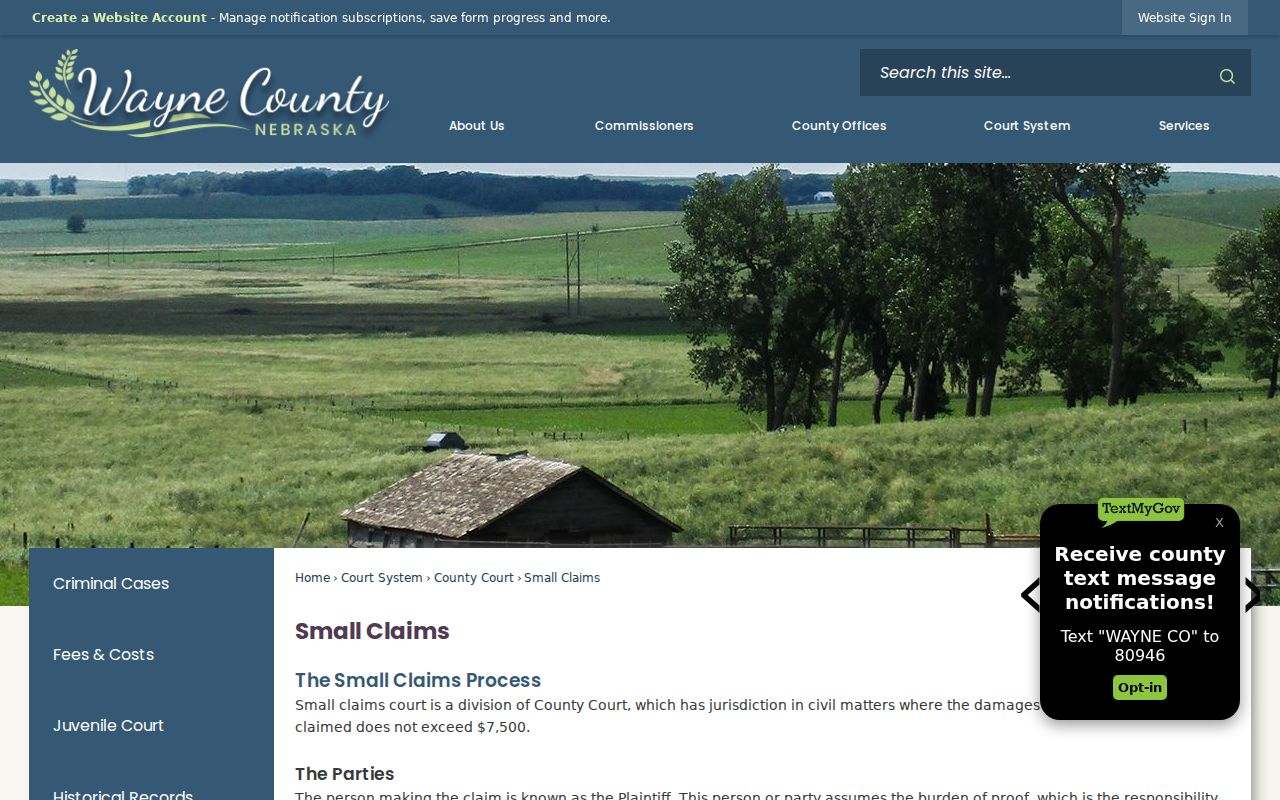
Even in small claims, an allegation is not an outcome. Wait for a later judgment or order before the docket entry is read as a court result.
Hearings on the Civil Docket
A Wayne County civil docket can carry many kinds of entries: a summons return, an answer, a motion, a scheduling event, mediation, a trial setting, a default, a judgment, a settlement, or a satisfaction. One caution matters here. A setting is only the date set aside for an event. It is not proof the event took place. Check the calendar first, then re-read the register after the date passes. A continuance, a vacatur, or a later order can change what an earlier entry seemed to promise.
Keep the two tools straight. The calendar holds current and future scheduling; the register is the trial-level record of what was filed. When a civil date looks shaky, start with the Wayne court schedule. Then call the right clerk to confirm.
Wayne Civil Docket Counts
How busy is the Wayne County civil docket? The FY2025 Nebraska county-court report lists 209 civil matters and 12 small-claims matters for Wayne County, covering July 1, 2024 through June 30, 2025. These are filing counts, nothing more. They say nothing about claim values or the number of judgments, and they are the reason CI and SC should stay separate when you read Wayne docket results.
The annual caseload report is where the Wayne categories come from. Treat the count as background for the local docket, not as an account of any single case.
Who Can See Civil Dockets
Who gets to look? Article 8 opens party indexes, case summaries, registers of actions with available images, calendars, and public judgment or order summaries to the public through JUSTICE, authorized remote access, or a courthouse terminal. The district records-maintenance rule §6-1523 treats the clerk's register, trial docket, indexes, financial record, and case file as separate components of one court record.
Access still has limits. Sealed, protected, or statutorily confidential material may be unavailable. A public index does not open every attachment. The Nebraska Public Records Act §84-712 offers a general route to examine and copy records, but court-specific rules govern court records. So name the exact public component you need.
For a Wayne civil docket, the official §6-1523 page lays out the distinct parts of a court record that sit behind it.
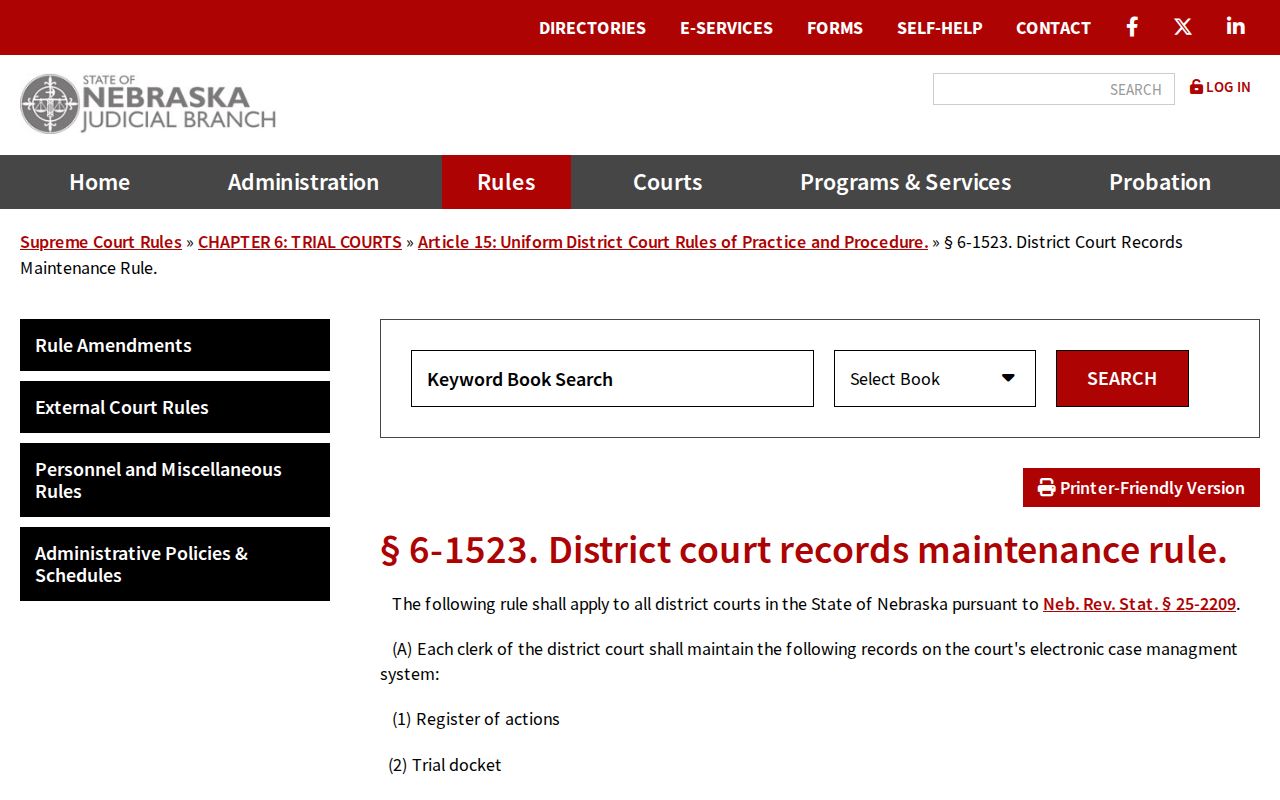
Not every copy is the same product. A register printout, a public image, and a certified copy are three different things, so tell the clerk which one you want.
Wayne Civil Document Requests
Need a county-court file? Call clerk magistrate Ashley Siebrandt through the Wayne County Court at 402-375-1622, or visit 510 Pearl Street, Suite B, weekdays from 8:30 a.m. to 5:00 p.m. District records go to Diane Pieper, the District Clerk, at 510 Pearl Street, Suite 6, 402-375-2260, with the same published hours. The county copy FAQ asks callers to name the document and say whether certification is needed, since some records live on microfilm.
Give the clerk the full picture. Identify the court, case number, party name, and approximate year, plus the document title or date and the product you want. A public image is not a certified copy. A filing fee is not a copy fee. The online result alone cannot confirm what public document the court can retrieve; the local court and clerk can.
What if an online register looks thin? There is a clear sequence. First verify the court and case number in JUSTICE. Next figure out what the missing item actually is: an image, a paper or microfilm document, a certified copy, a transcript, or another file component. The clerk can quote or confirm the current copy process. Where public access limits apply, request only the material you need and respect any seal, redaction, juvenile restriction, or other confidentiality rule. Trying a different spelling or a third-party site is not a lawful way around a court-record limit.
That same sequence prevents a common mix-up. A civil docket search shows procedural activity, nothing else. It does not establish the terms of a settlement, the contents of a protected attachment, or whether a judgment is collectable today. Ask the court for the specific public record, then read it alongside the later register entries.