
Wayne County Criminal Docket Searches
Nebraska's Judicial Branch runs the Case Information service. Its JUSTICE one-time search is the fastest remote route into a Wayne County docket search. Enter a name or a full case number. Pick Wayne County, then County Court or District Court if you know which one holds the case. For a felony, run both searches. The preliminary record in county court and the later district-court record may sit in separate files.
Check the caption, court, case type, year, and case number against the public result before trusting it. One search returns up to 30 records. Viewing stays open for three calendar days. The one-time charge is $17 even if the search finds nothing, so narrowing a common name by court, year, or type saves money.
- Open JUSTICE, accept its terms, and enter the name in the court’s spelling or enter the complete case number.
- Select Individual or Entity, choose Wayne County, and use the court-type filter when it is known.
- Use CR or other reliable filters only after the core search is too broad.
- Open the matching case and read the register in date order, separating a charge, setting, ruling, disposition, and later payment entry.
- For a missing public image or a certified copy, contact the clerk who keeps that court’s file.
Wayne Criminal Search Fields
JUSTICE offers far more than a name box. Public searchers can set Party Name, Individual or Entity, County, Case Year, Court Type, Case Type, Case Subtype, Judge, Attorney Name, sort controls, and an optional Client Memo. For a Wayne criminal lookup, start with the name. Add Wayne County next, then court type and a likely year or CR type. A matching name is only a lead. It proves neither that every person listed is the one you want nor that every record is open to the public.
The official public field preview makes clear why narrow searches pay off. A result can pull up a case summary, party roles, financial entries, the register, and public images. What shows varies by case and access rules. Charge text in a result is not a finding of guilt.
The official JUSTICE one-time search page displays the actual search route. A Wayne County docket lookup uses that route.
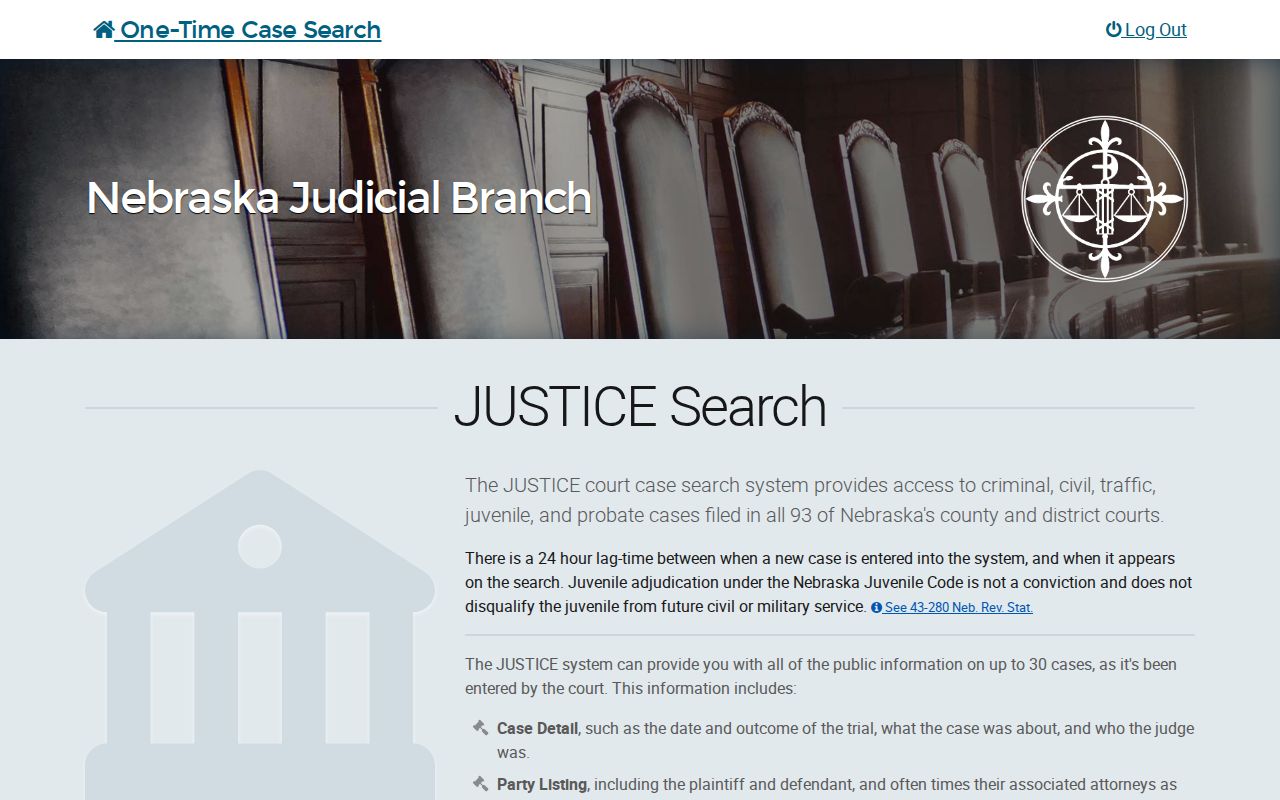
This screen is only the entry point. The chronological public events appear once the register opens after a match.
Criminal Dockets: What They Show
A Wayne criminal register is a chronological index, usually shorter than the full case file. It can show the court, caption, case number, subtype, parties and roles, event dates, costs or payments, and links to public document images. An image link, when one appears, is the actual filed item. A certified copy is different. The clerk authenticates it, and saving an online image does not create one.
| Case number | The court’s retrieval identifier. Nebraska criminal matters commonly use the CR type code within the full number. |
|---|---|
| Charge entry | A public offense description, count, or statute reference when displayed. It records an allegation at the filing stage. |
| Register of actions | Dated filings, hearings, orders, and later events in chronological order. |
| Setting | An arraignment, preliminary hearing, motion, trial, or other scheduled event. A setting is not proof it occurred. |
| Disposition | The later public plea, verdict, dismissal, diversion, judgment, or closure language, if shown. |
Note: Copy the exact public docket language, especially when a result is pending, continued, dismissed, or closed.
Wayne County Felony Docket Path
A Wayne criminal register is a chronological index, usually shorter than the full case file. It can show the court, caption, case number, and subtype. Parties and roles appear too. So do event dates, costs or payments, and links to public document images. An image link, when one appears, is the actual filed item. A certified copy is different. The clerk authenticates it. Saving an online image does not create a certified copy.
The practical path is County Court preliminary record → possible bind-over → District Court case. Search both registers when the record indicates a felony moved forward. The Wayne County Court identifies its local jurisdiction, while the District Court directory provides the district clerk’s local record contact.
County Court clerk magistrate Ashley Siebrandt keeps county-court files at 510 Pearl Street, Suite B. District Clerk Diane Pieper holds district records at 510 Pearl Street, Suite 6. Both offices are open weekdays from 8:30 a.m. to 5:00 p.m. Call ahead with the case number and the item you want, whether a register printout, an order, or a certified copy.
Criminal Case Stages on the Docket
A Wayne County criminal docket is a register of actions. It tracks what got filed and when, not everything said in the courtroom. A criminal case may open with a complaint, citation, information, or filing. From there, public entries can show an initial appearance, arraignment, plea, and preliminary hearing. Later entries may add motions, continuances, trial activity, disposition, and sentencing. Payment, appeal, or closure entries can follow. Read past the first outcome. An appeal, a warrant recall, or a satisfaction entry can appear later. It can change what the case looks like today.
Docket flow: Filing → Arraignment → Pretrial → Plea or Trial → Disposition → Sentencing.
- Arraignment
- An appearance addressing the charge and plea process.
- Preliminary hearing
- A probable-cause hearing in a felony path before possible bind-over.
- Continuance
- A postponement. Check the later entry for the replacement date or outcome.
- Disposition
- The public outcome or resolution language recorded for the case.
Wayne Criminal Docket Volume
The Nebraska Judicial Branch FY2025 county-court report counts 28 felony matters and 158 misdemeanor matters in Wayne County. The reporting period runs July 1, 2024 through June 30, 2025. Those numbers are case-count categories. They are not convictions, sentences, or a tally of people. They do help explain why a Wayne County docket search can return several records. One case may carry many procedural entries.
The FY2025 annual county-court caseload report is the source for those Wayne counts. A count is descriptive only. It says nothing about why any particular case was filed, continued, or resolved.
Wayne County Criminal Docket Courts
For a Wayne misdemeanor, traffic case, or municipal ordinance matter, start with County Court. A felony preliminary record starts there too. For the later felony record after bind-over, start with District Court. Other district criminal files start there as well. The caption and case number name the controlling court, so let them decide. Never guess the keeper from a street address alone.
When remote results fall short, Wayne County Court advertises a public-access computer at the courthouse. That terminal may avoid the remote search charge. It still cannot override sealed or protected access rules, and free printing is not promised. The County Court page is one local source for routing a docket question to the right court and clerk. The District 7 directory serves the same role.
Wayne Criminal Docket or History
A Wayne criminal docket tracks the procedural events of one court case. Think of it as a case timeline, not a person's full past. It is not a Nebraska State Patrol criminal-history report. It should never be described as a complete statewide history. JUSTICE can leave out juvenile, sealed, protected, or otherwise restricted information. A public court search certifies nothing about completeness.
Money entries deserve the same caution. A payment recorded on a docket settles nothing about the case as a whole. The state's criminal and traffic schedule lists a general $95 total category. That figure covers filing fees and court costs. It is not docket retrieval, and it is not a universal fine. The online payment route also warns that a warrant stays active until the court recalls it. For warrant status right now, contact the court or jail. That is what the official payment page tells you.
Access Rules for Criminal Dockets
Nebraska Article 8 opens the door to party indexes, case summaries, registers of actions with available images, and calendars through JUSTICE, an authorized remote provider, or a courthouse terminal. The door only opens so far. Sealed, protected, statutory-confidential, juvenile, and criminal-history material may be omitted or redacted. A blank result or a missing image proves only that you cannot see it, not that no case or document exists.
Public-record boundary. Nebraska Supreme Court Article 8 governs public electronic court-record access. Nebraska statute §43-2,108 restricts juvenile-record disclosure. Rule §6-1524 requires special handling of criminal personal and financial information.
Wayne County Court handles juvenile jurisdiction, yet limits still apply. The official juvenile confidentiality statute spells out what stays closed.
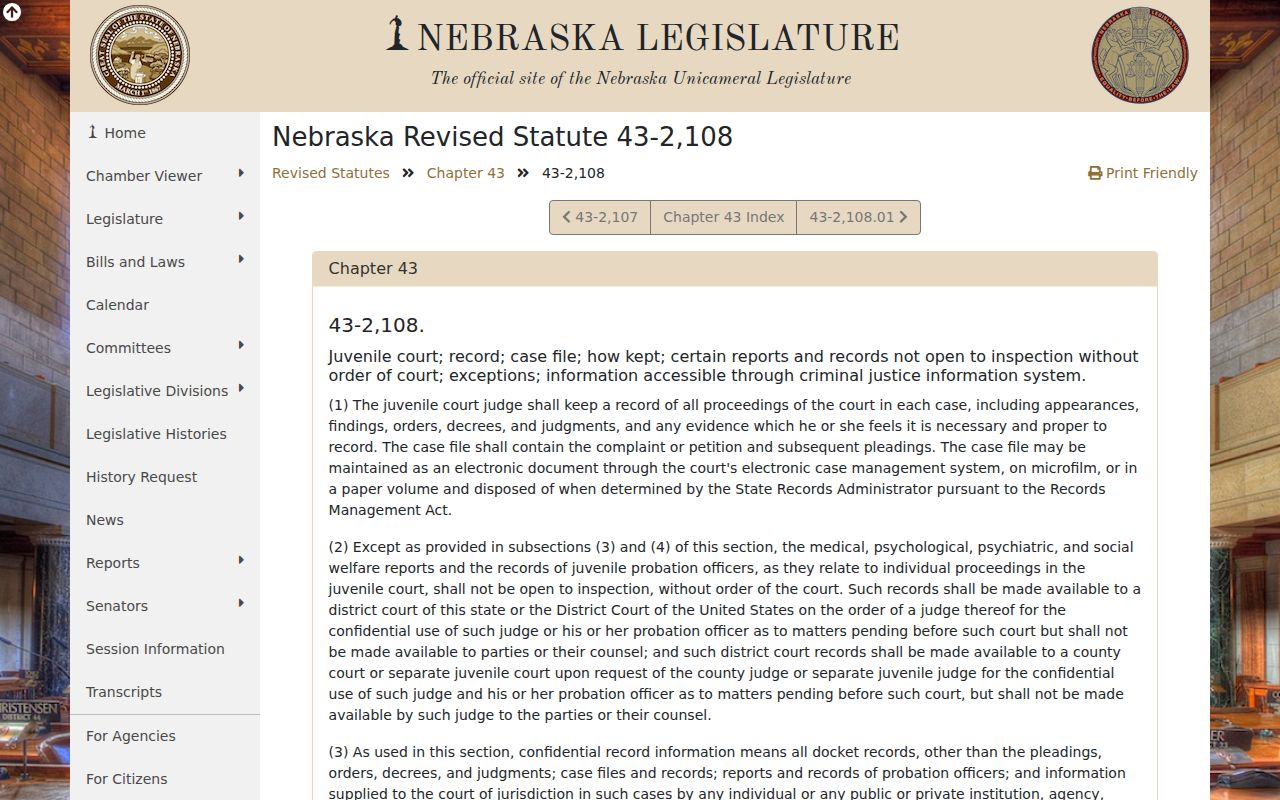
Protected material should stay protected. Ask the appropriate clerk what portion of a file is public and how to make a permitted request. The safeguards for criminal personal and financial information come from Nebraska Rule §6-1524, the official source.
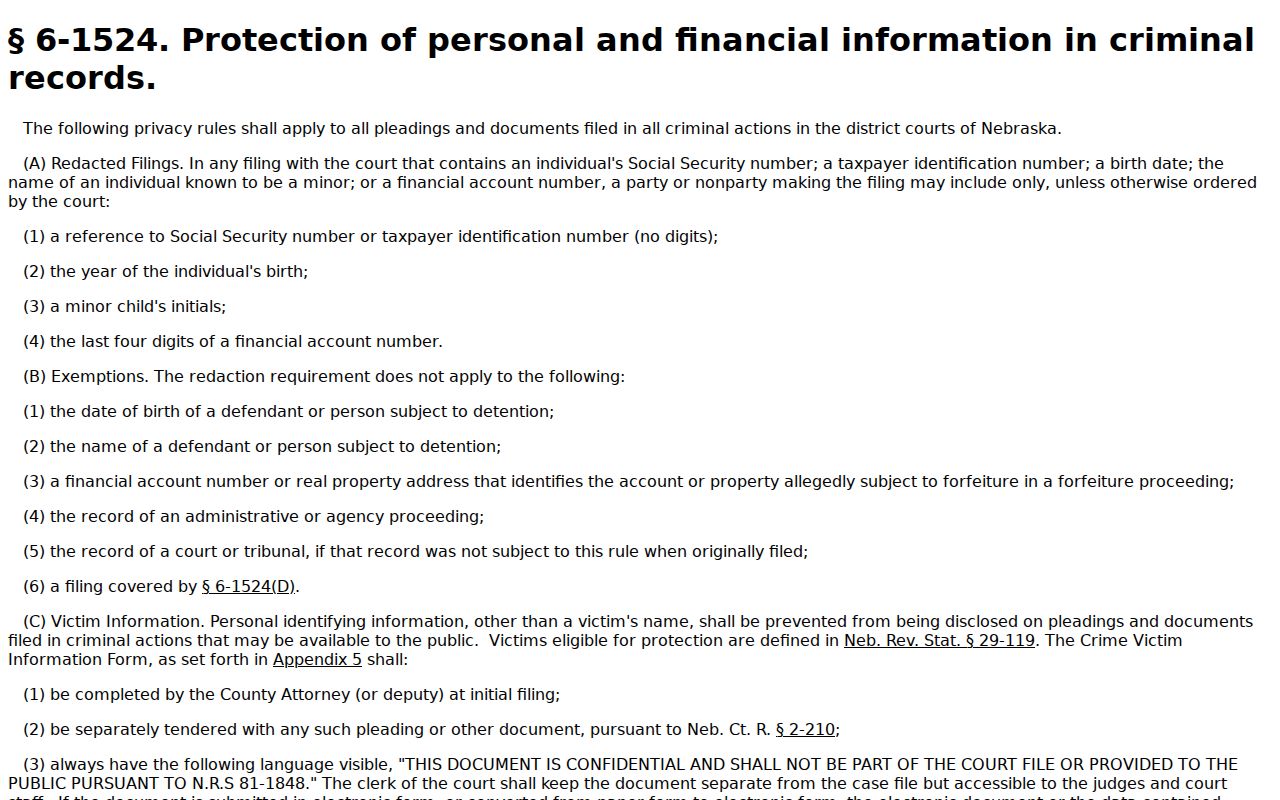
The rule is a reminder in practice. Read a public criminal docket for its procedural events, and leave the protected identifiers and financial details where they are.
Wayne Criminal Image Checks
An online register can exist without any public image. Wayne County's copy FAQ tells requesters to call ahead. Name the documents wanted, and say whether copies should be certified. Some local records sit on microfilm. Advance notice can save you a wasted trip. When you contact the clerk, give the court, the case number, and the document date or title. Say whether you want inspection, an ordinary copy, or certification.
For an unclear event, compare the register with the separate current and future calendar. Then ask the correct clerk for the specific public document. That habit keeps a scheduled event distinct from one the court has recorded as completed.
Wayne County Court offers three complementary channels: the public terminal, the clerk counter, and the phone line. The terminal helps when a remote search runs too broad or payment is not practical. At the counter, ask whether a given document is public. Also ask whether it lives on paper, microfilm, or as an electronic image. By phone, the clerk can identify which court holds the record. The clerk can also say whether to prepare anything in advance. District records work the same basic way, but the District Clerk is the custodian. A formal request should name the court and the specific record component. Asking generally for everything tied to a criminal matter will get you less.
If the immediate question is a future hearing, use the separate state calendar. The last register entry is not a live schedule. After the hearing date passes, read the later register entry before calling the event completed. That short check prevents confusion. It keeps a setting distinct from a plea, a trial, a sentencing event, or a dismissal.